
Ahmedabad-headquartered Zydus Lifesciences posted a 17 per cent year-on-year (Y-o-Y) rise in revenue from operations to Rs 6,123 crore, while the net profit increased by 38 per cent to Rs 1,258.6 crore aided by consistent performance in the US and India formulations businesses.

Delhi High Court has cleared the way for Zydus Lifesciences to proceed with the sale of its version of the cancer drug nivolumab in India. nivolumab is used to treat several types of cancer by activating the body's immune system to target carcinogenic cells.

Indian pharmaceutical companies are strategically increasing investments in the US market, focusing on specialty drugs, complex generics, respiratory products, and local manufacturing, despite a nearly 10 per cent fall in exports to the US in FY26 due to pricing pressure and competition in traditional generics.

Ahmedabad-based Zydus Lifesciences said on Tuesday that a new drug application for its oral drug Desidustat used in treating anaemia in chronic kidney disease (CKD) patients had been accepted by the National Medical Products Administration of China (NMPA). In 2020, CMS International Development and Management Ltd, a wholly-owned subsidiary of China Medical System Holdings Ltd obtained an exclusive license for the product from Zydus. CKD involves a gradual loss of functioning of kidneys and eventually leads to kidney failure.

At the heart of this debate is Section 3(d) of the Patents Act, a safeguard designed to prevent drugmakers from extending monopoly protection through trivial modifications to existing medicines.

Artificial intelligence (AI) is no longer a side conversation for Indian pharma. It is fast becoming central to how drugs will be discovered, made, and supplied. Along with that shift comes a sharper focus on innovation, on the one hand, and quality and trust, on the other.
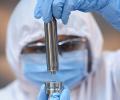
'We are looking at what kind of products, diagnostics or other solutions we can offer to become a well-rounded player in a particular disease area globally.'

The tailwind of low price erosion in the US generics market, seen by domestic pharmaceutical companies in calendar year 2023 (CY23), may be reversing slowly, caution analysts. According to the latest data from US-based Centers for Medicare and Medicaid Services (CMMS), price erosion in calendar year 2024 (CY24) on a year-to-date (YTD) basis stood at a high of 15 per cent in the oral solid dosage (OSD) segment compared to a low of 1 per cent in CY23. This erosion, according to a report by Antique Stock Broking, was the highest in the last three years.
The European Union's (EU's) offer to slash tariffs on 97.5 per cent of Indian chemical exports to zero is set to give India's pharmaceutical and medical device firms preferential access to the European markets.

Even as most of its large-cap pharmaceutical peers have struggled to stay above water on the returns front, Zydus Lifesciences has been one of the big outperformers within the sector over the past year with a return of over 30 per cent. The gains have come on the back of multiple triggers such as the scaling up of new product launches in the US market, clearance for its Moraiya (Gujarat) facility and steady performance in the domestic market. Though it has been the top pharma gainer in the 2022-23 financial year (FY23), brokerages continue to maintain their 'buy' stance, given the strong visibility in the US market.

Midcap stocks Hero MotoCorp, Zydus Lifesciences, JSW Energy, NHPC, Bharat Heavy Electricals, Bosch, and Samvardhana Motherson are expected to earn upgrades.
Indian Pharmaceutical Alliance (IPA) on Friday said US President Donald Trump's move to impose 100 per cent import tariffs on pharmaceutical drugs from October 1 will impact only patented and branded products, not generic medicines.

Five firms, including ACC Ltd, HDFC Asset Management Company and FSN E-Commerce Ventures that runs Nykaa, will be dropped from Nifty Next 50 index from September 29. NSE Indices Ltd, an arm of the National Stock Exchange, on Thursday said that Indus Towers and Page Industries will also be dropped from the index. Punjab National Bank, Trent, Sriram Finance, TVS Motor Company, and Zydus Lifesciences will be included in the Nifty Next 50 index, NSE Indices said in a statement.

Mutual funds' largecap investment universe is expected to see seven changes in the upcoming stock reclassification exercise by the Association of Mutual Funds in India (Amfi). According to a report by IIFL Securities, Hero MotoCorp, Zydus Lifesciences, JSW Energy, NHPC, Bharat Heavy Electricals, Bosch and Samvardhana Motherson are expected to earn upgrades in the revised list of largecap, midcap and smallcap stocks set to be released in the first week of July. Amfi revises the list at the start of January and July every year based on the previous six-month performance of the stock.
The BSE Healthcare Index is up 19 per cent as compared to BSE Sensex returns of 11 per cent during this period. Nitin Agarwal of DAM Capital highlighted this trend in a report last month. "After a sustained period of underperformance over FY21-23, the BSE Healthcare Index has once again captured the spotlight. "The recent uptick in performance has been driven by hospitals and emerging green shoots in pharmaceutical exports, particularly to the US, along with sustaining momentum in domestic branded formulations," he said.
Indian pharmaceutical companies may have units abroad as part of "distributed manufacturing" across various locations, according to industry veterans. This may come about over the next five to 10 years.

A reading of the reports suggests that there is no standard practice for reporting political contributions and it is left to the company's discretion to report them as they find fit.

ZyCoV-D is a three-dose vaccine administered intradermally.

Indian drugmakers supply 47 per cent of the generic medicine requirements in the US, and tariffs would have increased prices in the US domestic market for patients, who are already dealing with drug shortages.

The Indian equity markets will soon account for over a fifth of a key emerging market (EM) benchmark tracked by funds with assets exceeding $500 billion. This development is expected to funnel as much as $3 billion into the domestic markets. Following the latest review undertaken by global index provider MSCI, India's weighting in the MSCI EM index will surpass 20 per cent for the first time, narrowing its gap with the current top-weighted China to fewer than 400 basis points.
Hospitals to recover from sluggish Q3; diagnostics' growth rate at pre-Covid levels.

An acute drug shortage in the US and stable pricing along with product launches are likely to boost revenues of India's pharmaceutical companies during the first quarter of this financial year, analysts said. Most brokerages estimate a top line growth of around 14-15 per cent, with earnings before interest, taxes, depreciation, and amortisation (Ebitda) growth of 24-30 per cent for Q1 of FY24. Hospitals are, however, likely to report lower occupancy rates, and diagnostics companies may witness an impact from delayed monsoon.

Drug shortages in the US are at an all-time high, and price erosion has stabilised, which could benefit Indian pharmaceutical (pharma) companies with a US focus, according to analysts. Nuvama Research analysts said that US price erosion seems to have normalised to its old levels of 6-8 per cent and volumes are picking up with easing of inventory. Similarly, an ICICIdirect analyst noted: "Price erosion intensity has now moderated to a single digit and is expected to tone down a

The National Stock Exchange (NSE) Nifty Next 50 Index could undergo large-scale changes if the proposed tweaks to its computation methodology get implemented. In a discussion paper floated recently, NSE Indices, which owns and manages a portfolio of over 350 indices under the Nifty brand, proposed that only stocks that are traded in the futures and options (F&O) segment can be part of the index. Currently, as many as 11 non-F&O stocks are part of the Nifty Next 50 Index, which, as the name suggests, represents the next rung of large and liquid securities after the Nifty50.

'Just put a patch on your arm and the vaccine can be absorbed by the body.'
Notwithstanding the fact that the country's pharmaceutical (pharma) pricing regulator has allowed a 12 per cent price increase for medicines listed under the National List of Essential Medicines (NLEM) in 2023, analysts and industry insiders predict that the overall domestic pharma industry will only witness a price hike of 5-6 per cent. This is attributed to higher competitive intensity in the market. Krishnakumar V, executive director and chief operating officer (CEO) of Eris Lifesciences, a domestic-focused pharma company, noted that the NLEM segment experienced growth suppression of around 150 basis points due to price reductions during the January to July period this year.

The category is expected to cross Rs 38,400 crore by 2020.
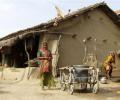
Armed with green nod and fund infusion, Gujarat govt getting ready to issue tenders to build infrastructure at the mega investment region
